



Folks often ask us a simple question that deserves a long answer: what exactly are you building, and why does it matter now? Rather than reply in fragmented DMs, we wanted to share the full version of our thinking. This lays out the vision behind Freeport, the market shift we’re betting on, and the personal experiences that pushed us to spend the next decade building a user-aligned interface. What follows is the clearest articulation we have today of where we think finance is going, and the role we intend Freeport to play in that future.
There is a tide in the affairs of men.
Freeport’s central thesis is that the next wave of on-chain users will be long-term allocators rather than day traders, and will only adopt DeFi when it feels legal, legible, and low-effort. These investors care about compliance and risk, and do not want to assemble protocol stacks, learn new jargon, or live on Twitter. Almost no one in DeFi is building for them.
Post-2020, builder energy in DeFi shifted from real utility toward gamification and speculation. Meme coins and casino-like perps with 100x leverage captured attention while the original ideals of a disintermediated, permissionless, composable financial system were sidelined. Freeport exists to return to those first principles and give ordinary investors access to real economic functions, such as pre-IPO equity and private credit, that blockchains make possible.
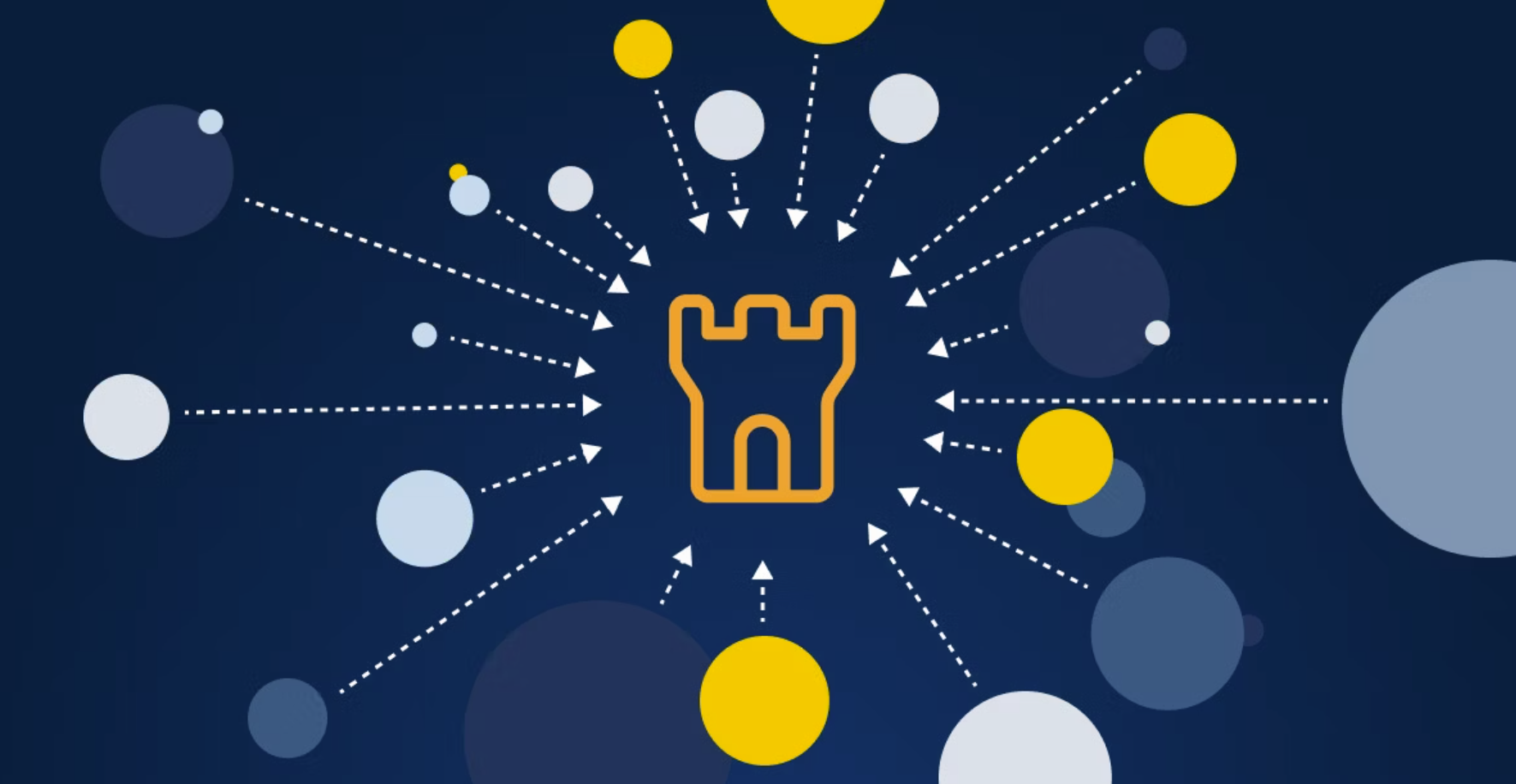
Our product premise is simple: investors should have a single, trusted interface to allocate capital across every major DeFi protocol. Everyone agrees DeFi is fragmented, but most responses stitch together media feeds, speculative products, and leverage. They optimize for engagement, not outcomes. We optimize for what long-term allocators actually care about: plain-language risk/return and valuation context, credible issuer and governance information, strategies with uncorrelated returns, and a UI that abstracts away DeFi’s complexity.
We are at a generational inflection point for on-chain finance. Regulatory clarity is unlocking institutional capital, and the infrastructure needed to treat digital assets as one coherent, tradable universe has just matured. In the last 6–12 months we’ve seen instant cross-chain settlement, institutional-grade lending, and tokenization of private and pre-IPO assets. Crypto has shipped more genuine “economic rail” upgrades in the past year than during the entire preceding crypto winter.
This above all: to thine own self be true.
I am a quant trader by training, with experience at Jane Street and IMC, and I have loved markets since I was a kid. Before I ever touched an exchange, I was trading cosmetic items in video games in high school. I discovered crypto around the same time and, by college, was deeply engaged in protocol docs and onchain markets.
A formative moment made the ideology real: one of my gaming accounts was frozen because I used bots to trade. I hadn’t broken any posted rules, but a centralized platform still shut down years of work and value. That made disintermediated, permissionless, composable systems feel less like theory and more like necessity.
My co-founder comes from a complementary path: he’s ex-Huawei and ex-Capital One. His dad worked in startups, so he grew up knowing a “normal job” was not the end goal. We met freshman year of college and have been close ever since, two kindred souls who never entirely fit the default track; I’ve spent every Thanksgiving with his family for years, and we’ve shared family vacations. Freeport comes as much from that alignment of values as from our skills.
In college, I got distracted by trading. It was intellectually thrilling and financially rewarding, but ultimately not fulfilling. What actually felt meaningful wasn’t PnL, it was building with people. I was president of my fraternity and grew the Duke Quant Finance Club from ~10 to ~200 members. Doing something I cared about, with people I loved, is what makes me truly fulfilled.
We’re not building Freeport just because it’s a good business; we are ideologically and mission-driven to see a world of disintermediated, permissionless, composable finance that is accessible and compliant enough for normal people to use.
What’s past is prologue.
We already see early signals of the demand we are serving. In trading / quant Discord communities, engineers, analysts, and traders discuss sophisticated on-chain opportunities but do not move substantial capital because the operational and cognitive friction is too high. Our answer is to aggregate those opportunities, provide education and context, and reduce on-ramping friction behind one interface.
We see similar signals from students. At a token pitch competition we hosted, over a hundred participants analyzed tokens like stocks, focusing on business models and cash flows. For many, it was the first time crypto looked like real businesses rather than a casino. No existing platform is positioned to serve that emerging cohort of value- and yield-seeking users with a simple product.
Even in its current form, our product shows users are willing to bear high switching costs to access the alternative assets, high yields, and lower trading costs that DeFi provides. Over the next three to five years, we expect that no one will need to interact directly with a traditional brokerage or bank to manage their finances. Stablecoin payment rails are maturing in parallel with on-chain asset rails. The logical endpoint is a super-app for on-chain finance in one place.
Freeport’s wedge is the interesting, hard-to-access investment opportunities: exposure to frontier AI companies, hedge-fund-like strategies, and complex products simplified into a few understandable positions, that motivate users to move first. As more assets move on-chain, legacy stacks at banks and centralized exchanges become less defensible. Durable value capture shifts to the interface layer that owns the relationship and routes flows across neutral rails, where Freeport sits.
Uneasy lies the head that wears a crown.
Underneath our product is a conviction about where finance is going: disintermediated, permissionless, composable. Disintermediation means platforms that simply custody balances cannot sustainably keep the economics for themselves; we can permanently compete with centralized exchanges on cost because we are routers, not warehouses (as a corollary, we believe Coinbase’s business model as it exists now will be gone in 5 years).
Permissionlessness means retail and international users will gain direct access to assets once locked inside private markets, pre-IPO equity, and private credit. Composability means that whenever a new, credible primitive is launched, we can be among the first to integrate it while incumbents update their technical stacks.
This is why we do not worry about being copied by incumbents like Coinbase or Robinhood. While they could route customer balances into the best DeFi protocols and pass through structural yields, that would cannibalize their high-margin core business. Their DNA is custodial, centralized, and margin-maximizing.
Wisely and slow; they stumble that run fast.
Most breakout crypto startups, Axiom, Pump.fun, Hyperliquid, Fomo, Euphoria, and others, are optimized for traders because trading generates immediate, high-margin fees. Building for long-term wealth is lower margin at the start, requires patient scale, and the target audience (crypto-adjacent households and institutions) is emerging rather than dominant.
Our contrarian thesis, in a market still optimized for perpetual traders, is that the next large wave of on-chain adoption will be long-term allocators, households, pensions, corporates, asset managers, who will only participate when it feels legal, legible, and low-effort. We are building for where the user base will be in two to five years, not for who is farming points this month.
In short, we have conviction in the idea that the next billion on-chain users will be long-term wealth allocators, not perpetual traders; that assets and payment rails will continue their migration on-chain; and that value will concentrate in neutral, user-aligned interfaces rather than custodial silos.
We also believe that now is the right moment to build: the rails are finally ready, the speculative era has overreached, the regulatory perimeter is hardening, and a new kind of user is starting to look over the wall. Our ambition is to become the default interface for serious on-chain wealth, and in doing so, to help make the custodial, extractive business models of today’s centralized custodians obsolete.