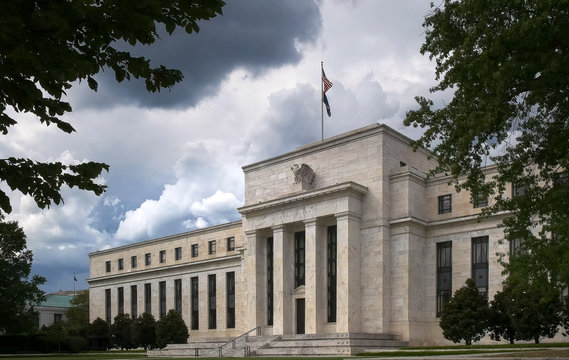






We consider some of the ways by which regulators have attempted to consolidate markets to address the challenges of market fragmentation while preserving the benefits of competition and specialized trading venues. Most of the analysis in this seriesare derived from the textbook Trading & Exchanges by Larry Harris.
Overview
Financial markets have evolved into a diverse ecosystem of trading venues and execution models—each tailored to different participants and needs. Yet this very fragmentation can impair price discovery, increase transaction costs, and obscure best execution. In this post, we explore how regulators and market designers have sought to consolidate fragmented markets without stifling competition or innovation.
We’ll survey proposals ranging from a centralized limit order book (CLOB) to nuanced order‐exposure controls, examine how high‐frequency trading both segments and stitches together liquidity, and review landmark regulations like Reg NMS and the upcoming Order Competition Rule. Along the way, we’ll see how single‐price auctions, volatility‐management tools, and evolving DeFi primitives aim to reconcile the competing demands of liquidity, efficiency, and fairness across today’s multifaceted market landscape.
Central Limit Order Book
While the drawbacks of fragmentation may make the idea of a single central limit order book for each security tempting, regulators in advanced economies have largely rejected it, as a CLOB presents several concerning issues that could hinder market efficiency and innovation.
If implemented decades ago, it might have stifled the development of electronic exchanges and other crucial market advancements, since competition is a key driver of progress. Historically, government-run monopolies have proven less efficient than competitive markets, and a centralized system operated by regulators could lack the agility and responsiveness seen in private-sector alternatives.
Consolidating all order flow into one system runs counter to the natural evolution of markets, which have existed for centuries without centralized control. Such artificial consolidation could create a de facto monopoly in order matching, potentially leading to higher fees, reduced service quality, and decreased innovation over time.
Moreover, centralizing every order in a single venue introduces systemic risk by creating a single point of failure—technical issues or cyberattacks could then have far-reaching consequences. A purely centralized system might also struggle to accommodate the diverse needs of different trading styles and could be more vulnerable to manipulation by those with insider access or control.
Finally, implementing a CLOB represents significant regulatory overreach, expanding government control over market structure beyond appropriate boundaries. This level of centralization opens the door to rent-seeking, as those in control of the system could exploit their position for personal gain rather than focusing on market efficiency.
Order Flow Externality
While differing trading needs lead naturally to fragmentation (as did geographical and technological constraints prior to the information age), the order-flow externality tends to drive markets toward consolidation. Practitioners often say “traders attract traders” or “liquidity begets liquidity,” referring to the network effect whereby a market’s liquidity improves as more participants join (all else equal).
To gain intuition, consider this thought experiment: if all traders were identical, with the same trading needs, then given n markets they would gravitate toward the largest one—where competition for buy/sell orders is greatest. By this logic, markets for a security should, over time, converge into a single consolidated venue driven by participants’ self-interest. Only differences in trading needs cause fragmentation.
Even if someone launches a new market with superior technology, services, or microstructure, it may not overcome the order-flow externality. In a game-theory ideal, all rational traders would migrate simultaneously; in reality, no one wants to be first. Thus, market-structure innovations often require regulatory intervention, as new venues must offer benefits large enough to counteract the existing network’s pull. Moreover, innovation usually occurs in incremental steps rather than dramatic leaps.
Dealers’ and market makers’ interests can diverge from maximizing the order-flow externality. That externality is strongest when natural buyers and sellers fully display their quotes, yet dealers can undermine it by filling small orders on terms equal to or better than the public market, diverting flow away from displayed liquidity.
Consider three scenarios: in (a) and (b), natural buyers and sellers interact directly, resulting in only a modest, essentially arbitrary transfer of wealth—impatient traders pay slightly more to patient traders, or vice versa. In scenario (c), however, a dealer steps in and “provides liquidity” by tightening the bid–ask spread. While this benefits individual trades in the short term, over the long run the dealer systematically extracts value from natural buyers and sellers. Furthermore, if dealers can establish preferential arrangements with brokers—routing small, uninformed orders away from central markets—they further erode the order-flow externality by siphoning off precisely the retail flow that sustains displayed liquidity.
Order Exposure Mechanisms
A market structure that allows participants to control order exposure significantly enhances the order-flow externality. This dynamic unfolds through several interrelated mechanisms, depending on the level of liquidity in the market.
Highly liquid, order-driven venues (think NYSE/NASDAQ) offer advanced order types such as iceberg orders (a large order that shows only a fraction of its total size) and hidden orders (visible only when executed against). These features attract sophisticated traders who value minimizing market impact—traders whose substantial flows, in turn, draw others seeking that deep liquidity. As more participants congregate on a platform offering these controls, the liquidity pool deepens, creating a self-reinforcing cycle.
Floor trading represents an even more extreme form of order control, since the on-floor broker can manage execution in ways that electronic platforms cannot. All else equal, order-flow externality is therefore often stronger on floor exchanges than on electronic ones for the same trading volume.
Quote-driven markets emerge in less liquid instruments—such as options—where matching natural buyers and sellers is unlikely. Mass Quote Protection (MQP) lets dealers offer robust quote sizes and tighter spreads by enabling rapid cancellation or adjustment of large batches of quotes when conditions change or adverse-selection risk rises (e.g. across correlated strikes and expiries). That protection encourages dealers to post more liquidity, which then attracts additional flow and further reinforces the network effect.
Brokered markets form in even less liquid OTC instruments (think FX). “Last look” gives liquidity providers a brief window—often just milliseconds—to reject a trade after an order arrives, protecting against stale-price or adverse-selection losses. With last-look safeguards, providers quote tighter spreads and larger sizes, drawing more order flow and cementing their market position. Yet last look is controversial: critics argue it violates the principle of firm quotes and can be abused.
In essence, by catering to diverse trading needs and enabling more nuanced order types, these exposure mechanisms create a more attractive environment where natural buyers and sellers can interact directly—amplifying the order-flow externality without sole reliance on market-maker intervention.
HFT as a Consolidation Mechanism
Fragmented markets arise because traders have diverse needs. Large traders prefer to hide orders, while small traders favor full transparency. Informed traders seek fully consolidated markets; others often avoid trading against them. Impatient traders use market orders and rely on market makers for liquidity, whereas patient traders place limit orders and compete directly with those market makers. Exchange members tend to defend the status quo, while non-members—who require broker intermediation—advocate for more open, transparent venues. Traders also differ in creditworthiness and trustworthiness; since trades only settle if both sides deliver, less creditworthy participants often trade via intermediaries willing to guarantee their obligations (for example, retail investors using brokers to mitigate counterparty risk).
No single market structure fulfills all these needs, so a variety of venues has emerged—and with that, some benefits of consolidation are inevitably lost. However, fragmentation need not doom price formation or elevate transaction costs, provided information flows freely between fragments and traders can respond quickly to liquidity and price changes across venues.
High-frequency (or low-latency) participants play a critical role in knitting together fragmented markets. They perform two main functions: (1) HFT dealers continuously update quotes across multiple venues, ensuring that price changes on one segment are reflected everywhere; and (2) HFT arbitrageurs move liquidity between segments whenever prices diverge, enforcing the law of one price and linking buyers and sellers across the ecosystem. Through these activities, HFT firms effectively consolidate information and liquidity, mitigating many of the downsides of market fragmentation.
Regulation National Market System
Though high-frequency traders help consolidate information across fragmented venues, other forces underscore the need for regulation to preserve market health—most notably optimal tick size and secondary-precedence rules.
Tick size is the minimum price increment at which a security can trade. If ticks are too small, liquidity providers face greater adverse-selection risk: it becomes easy for faster traders to “pick off” top-of-book quotes with minimal price improvement, prompting market makers to widen spreads or shrink quote sizes and thereby reducing overall liquidity. Conversely, if tick sizes are too large, traders must cross wider spreads to execute orders, raising transaction costs and potentially impairing market efficiency.
Secondary-precedence rules, such as time-priority (where orders at the same price are filled in the sequence they arrive), are equally vital. They incentivize market makers to post aggressive quotes and supply liquidity promptly, knowing they will be rewarded for speed and transparency.
However, both rules only work when consistently applied. In a consolidated market, a single venue can easily enforce time-priority on every order. In a fragmented landscape, regulators must ensure that all trading venues adhere to the same precedence standards—otherwise, a later order on one platform might execute before an earlier order on another, creating unfair advantages and undermining price discovery.
To address some of the negative externalities of fragmented markets, the SEC released Reg NMS in 2005. The Commission’s stated purpose:
“In its extended review of market‐structure issues and in assessing how best to achieve an appropriate balance between competition among markets and competition among orders, the Commission has been guided by a firm belief that one of the most important goals of the equity markets is to minimize the transaction costs of long‐term investors and thereby to reduce the cost of capital for listed companies. These functions are inherently related because the cost of capital of listed companies is influenced by the transaction costs of those who are willing to accept the risk of holding corporate equity for an extended period.”
The key rules designed to strike that balance include:
- Order Protection Rule (Rule 611): Requires trading centers to establish policies and procedures to prevent “trade‐throughs”—executions at prices inferior to protected quotations displayed by other venues. In practice, dealers may execute trades at any price displayed on the SIP (the consolidated feed) during a one‐second interval. While modern HFT technology makes sub‐second price updates possible, the finite speed of light prevents any participant from guaranteeing the absolute best price at every instant.
- Access Rule (Rule 610): Prohibits trading centers from unfairly discriminating against or imposing excessive access fees on other market participants. It mandates fair and nondiscriminatory access to quotations, fostering competition and ensuring all participants can reach the best available prices.
- Sub-Penny Rule (Rule 612): Forbids markets from displaying, ranking, or accepting quotations in increments smaller than $0.01 for stocks priced above $1.00 per share. This curbs excessive quote fragmentation and preserves a reasonable tick size.
- Market Data Rules (Rules 601 & 603): Require exchanges to make their best quotations and trade reports publicly available on fair and reasonable terms. These provisions promote transparency across a fragmented landscape while still allowing specialized venues to innovate.
Together, these rules aim to create a National Market System that preserves competition and innovation among diverse trading venues without letting fragmentation lead to inefficient pricing or unfair advantages. Nonetheless, many participants have submitted strong objections—both out of genuine concern and self‐interest—which are detailed in comments and letters linked at the end of this post.
Single Price Auctions
The opening and closing auctions at the NYSE are exchange mechanisms that aggregate orders from multiple market participants and match buyers and sellers at a specific time to establish the market clearing price. This concentration of order flow allows for more efficient matching of supply and demand, potentially resulting in fairer and more accurate pricing. Indeed, we know from Econ 101 that a single price auction generates the highest amount of surplus possible
Single‐price auctions also diminish high‐frequency trading advantages because all orders execute at the same auction price, regardless of submission time within the window. This levels the playing field for diverse participants and establishes a clear reference price—especially valuable at the open for absorbing overnight news and at the close for unwinding positions and setting benchmarks for financial products. Auctions also allow dealers to trade aggressively to minimize order imbalances, since the non-discriminatory auction mechanism ensures every executed order receives the identical clearing price, irrespective of its bid or offer level.
The main challenge of single‐price auctions is coordinating participation at a specific time. Patient traders—less sensitive to execution timing—can strategically await the auction, avoiding the bid–ask spread of continuous trading and potentially executing at a fair, uniform price. In contrast, immediacy-seeking traders continue to use continuous trading, effectively paying the spread premium for instant execution; their activity supplies ongoing liquidity and furthers price discovery between auction events. By combining uninterrupted trading with periodic auctions, exchanges attempt to balance continuous liquidity with the efficiency gains of concentrated, transparent price setting.
Responses to Volatility
Regulators and exchanges have responded to extreme volatility primarily through trading halts, price limits, transaction taxes, and margin requirements. While some of these measures are widely accepted, others remain controversial—and all become more difficult to coordinate in a fragmented market. In practice, central venues tend to lead the way when volatility spikes.
Circuit Breakers are trading halts triggered when prices breach predefined thresholds (commonly an index falling by a set percentage). Proponents argue that these halts reduce short-term volatility—technically true, since no trades occur during the halt, so prices appear frozen. Whether that “stability” is desirable depends on the underlying cause of the volatility.
If fundamental news drives the move, a halt merely postpones price discovery—and may even spook uninformed traders into panic, amplifying volatility once trading resumes. Conversely, if noise traders are the culprit, a pause gives informed participants time to coordinate and trade against that flow, restoring balance and dampening transitory swings. Halts that conclude with a single‐price auction further encourage liquidity provision: uniform clearing removes the instantaneous losses liquidity providers incur under continuous, discriminatory pricing. Additionally, pauses allow participants to meet margin calls, reducing fire-sale risk and mitigating the destabilizing effects of stop orders and leverage.
Critics point out that if traders anticipate a halt, they may rush to liquidate beforehand—potentially creating the very volatility that triggers the circuit breaker. To address this, some markets employ discretionary halts, empowering floor officials to pause trading when order imbalances or pending news threaten disorder, rather than relying solely on mechanical price triggers.
Although venues are not always required to follow an NYSE halt, most do, because the NYSE is a central liquidity hub. Without its auction, market quality deteriorates sharply: “liquidity begets liquidity,” and uniform‐price auctions attract the limited liquidity still willing to trade. Outside the auction, bid–ask spreads can balloon—Robinhood users have seen GME spreads widen to 2–3% during NYSE halts—underscoring why venues align their pauses with the primary auction to preserve fairness and price integrity.
Some investors—mostly on Reddit—argue that discretionary trading halts hurt retail participants. In a sense, they’re correct: halts are designed to minimize the price impact of uninformed traders and to reduce volatility. But if your goal were to turn markets into a casino, reduced volatility would be the last thing you’d want.
Margin requirements, set by regulators and self-regulatory organizations (typically clearinghouses), also curb volatility by lowering the risk of margin-call liquidations. Clearinghouses align their incentives with exchanges by making members financially liable for unsettled trades. Moreover, trading halts give participants time to meet margin calls, reducing the need for higher margin requirements.
Yet higher margins, while reducing systemic risk, can disproportionately burden capital-constrained traders and favor larger players. They limit the leverage that lower-risk strategies can employ, capping returns and sometimes preventing efficient strategies from running at all. The optimal margin level must therefore strike a balance between enhancing market quality in normal conditions and containing risk during turbulent periods. Regulators generally believe that, because exchanges and clearinghouses share liability, this alignment of incentives makes robust self-regulation largely sufficient.
Throughout history, many people have argued that excessive trading is bad for society and generates undue volatility. The strongest advocate for a financial-transaction tax in the U.S. today is Bernie Sanders, who has proposed “a tax with a very low rate” of 0.5% on stocks, 0.1% on bonds, and 0.005% on derivatives. While these rates seem small at first glance, they would hit market makers and high-frequency traders disproportionately.
That disproportionate effect feels inherently unfair because the tax targets trading frequency rather than economic value or profitability. Firms already pay corporate income tax on their profits; adding a levy based solely on transaction volume penalizes a business model that provides valuable liquidity and tighter spreads. If trading volume declined significantly, regulated exchanges could suffer wider spreads, reduced liquidity, and less efficient price discovery—detrimental not only to professional traders but also to retail investors and companies seeking capital.
Permissionless DeFi to Programmable Compliance
Regulators approach market consolidation with two intertwined objectives: preserving financial stability and ensuring markets function efficiently. On the stability front, authorities such as the Federal Reserve, the SEC, and the CFTC deploy macroprudential safeguards—capital and margin requirements, clearinghouse mandates, circuit breakers—to prevent cascades of failures that could threaten the broader economy.
Simultaneously, they craft market‐structure rules—tick‐size regimes, order‐priority standards, trade‐through protections, and consolidated‐feed requirements—to foster deep liquidity, transparent price discovery, and fair access for all participants. In the next section, we’ll explore how these dual imperatives drive efforts to consolidate fragmented trading venues—from central limit order books to auction protocols—and shape initiatives like Reg NMS and the proposed Order Competition Rule.
However, what regulators (and even most crypto-natives) miss is that programmable, tamper-proof ledgers not only powers permissionless DeFi but also lays the groundwork for a truly transparent, well-regulated financial ecosystem—one that could bring even the murkiest corners of private markets into view. Today, structured derivatives, private‐equity commitments, private‐credit facilities, hedge‐fund positions, and other alternative investments trade largely off-chain, obscuring counterparty exposures, leverage, and liquidity mismatches. By migrating these instruments onto a shared blockchain—or at least publishing essential terms via on-chain references—market participants and supervisors alike could observe aggregate positions and stress-test portfolios in real time.
Smart contracts can enforce the lifecycle of these complex products: a collateralized loan obligation’s tranche waterfall, a private‐equity fund’s capital‐call schedule, or a swap’s margin requirements can all execute automatically, with every payment, default trigger, and rebalancing event immutably logged. Regulators—whether the SEC, the Federal Reserve, or global bodies—could run read-only nodes that ingest this data into systemic-risk models, flagging concentrations of risk before they cascade. Instead of reconciling siloed spreadsheets and opaque disclosures after the fact, supervisors would see, for example, that a sudden drop in a leveraged real‐estate fund’s tokenized share price has pushed its margin ratio below threshold—triggering an on-chain auction to restore collateral and avert fire-sales.
Embedding compliance at the protocol level also makes enforcement lighter and more consistent. Know-Your-Customer and Anti-Money-Laundering checks become pre-trade gateways rather than post-trade burdens; tax-reporting events fire automatically when gains are realized; position limits and concentration caps cannot be breached because smart contracts simply reject out-of-bounds orders. This “compliance as code” model reduces operational complexity for regulated entities while giving oversight bodies high-fidelity data on global flows of capital—across equities, credit, derivatives, and alternative‐asset classes.
In sum, blockchain technology offers a dual promise: unfettered innovation in a permissionless realm, and turnkey, programmable compliance in a regulated one. By extending its transparent rails to structured products, private markets, and hedge-fund strategies, we could move from patchwork reporting to real-time surveillance of global financial stress. That shift would empower the SEC, the Fed, and international regulators to detect liquidity strains, interlinked exposures, and procyclical leverage before they threaten systemic stability—fulfilling blockchain’s potential as both an engine of innovation and a guardian of ordered liberty.