





If you come from equities, the phrase “fundamental value” means something grounded: cash flows, assets, covenants, and legal claims. Crypto confuses this instinct because tokens can look like money on Monday, software licenses on Tuesday, marketplace seats on Wednesday, and community badges every day in between. The same ticker might be used for paying fees, staking for security, voting on parameters, and signaling membership.
It is indeed hard to know which valuation lens to pick up. The good news is that under the surface, value in crypto concentrates around a small set of economic primitives: money, blockspace, work, cash flows, collateral, and culture. Once you frame tokens as specific expressions of these primitives, rather than as an amorphous “technology bet,” the path to fundamentals comes back into focus.
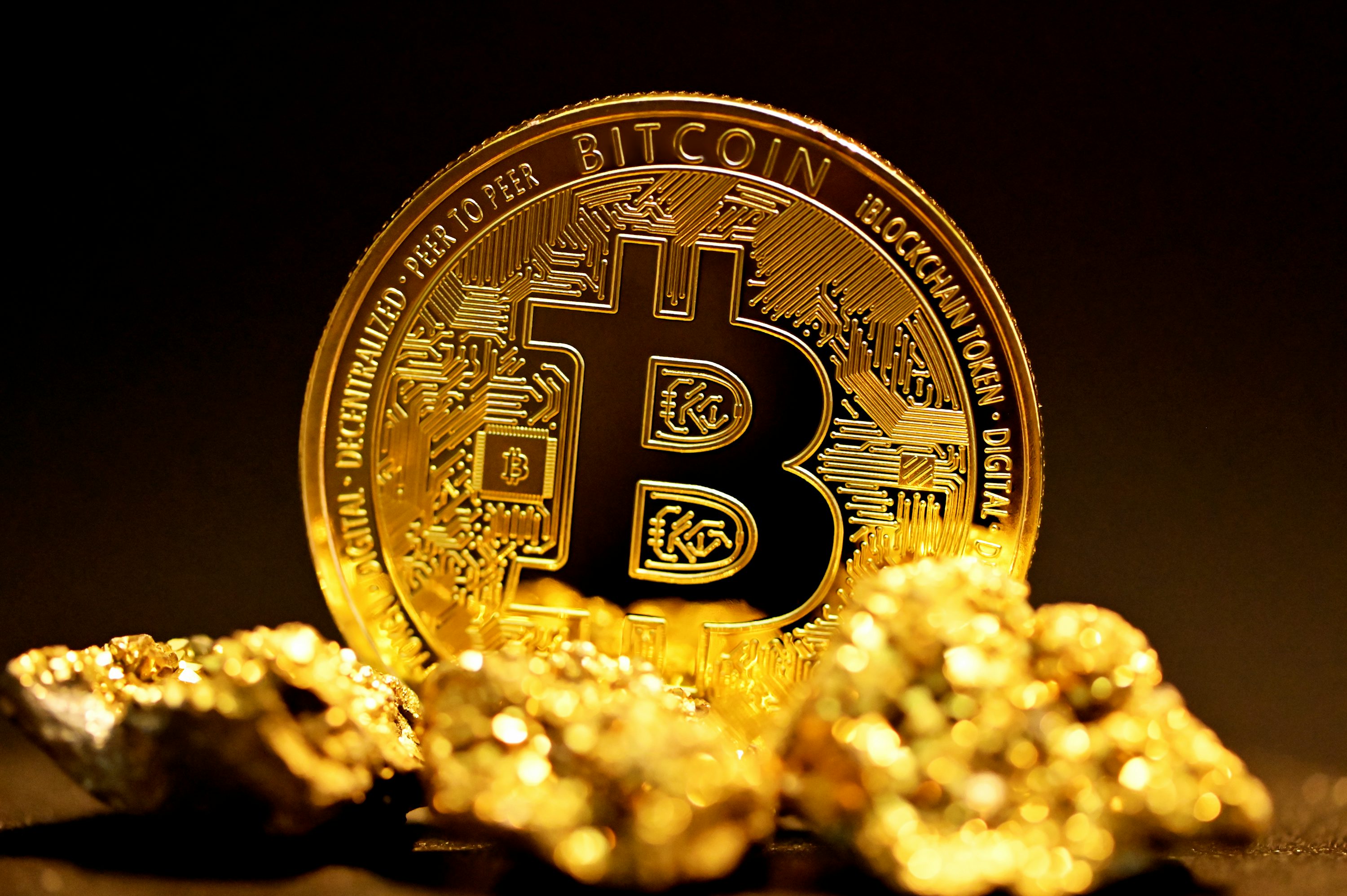
Bitcoin & Monetary Tokens
The simplest claim a token can make is “I am money.” Monetary assets do not owe you dividends; they promise credibility. Their value is a monetary premium, the price people will pay to hold an asset with rules they trust and a supply they can roughly predict. If a network can keep issuance bounded, maintain censorship resistance, and accumulate deep, global liquidity, its token accrues value as reserve collateral, savings instrument, and sometimes unit of account within its own ecosystem (an example here is BTC). This is closer to gold than to a stock. The analytic mistake here is to seek discounted cash flows; the more coherent mental model is to ask how credible the rules are, how hard it is to seize or freeze balances, and how deep and diverse the holder base has become. In money, longevity and neutrality are features you pay for upfront, not coupons you clip later.
Foundational Blockchains
Next consider smart-contract platforms (like ETH or SOL) which are the operating systems of blockchains. Fundamentally, these networks sell blockspace, the right to write transactions into a secure ledger, and their economics resemble a combination of a marketplace and a public utility. Demand comes from applications and users; supply is constrained by throughput, latency, and the network’s security budget. When fees are burned or otherwise routed back to the token, usage can create a direct link between activity and value accrual.
Staking layers complicate the picture: issuance pays validators, fees and MEV (miner/maximum extractable value) top up the security budget, and the token’s net supply depends on how these forces balance. The fundamental lens here is that you are buying exposure to future net demand for blockspace, mediated by policy choices about burns, fee shares, and issuance. If the platform is also used as collateral or savings, it carries a monetary premium on top. If it is not, expect the token’s value to track net fees and the credibility of how they are shared.
Layer-2 Solutions & Infrastructure
The story continues on layer-2s and data availability networks, which sell cheaper or specialized forms of blockspace. Rollups compress many transactions and settle them to a base layer; data availability networks sell “blobspace,” bandwidth for publishing transaction data. The question that separates hype from fundamentals is whether tokenholders participate in sequencer profits and data fees in a way that is credibly committed in code and governance.
If the core revenues sit inside an off-chain company and the token is a promise to route them someday, the appropriate discount is steep. If, by contrast, the token meters access to scarce resources, enforces settlement rules, and participates in fee flows or burns today, you can reason about future cash generation much as you would for a logistics platform that charges tolls at scale.
Work tokens and crypto infrastructure extend that same intuition to specific services: storage, compute, bandwidth, oracles, indexers, verifiers. Here the token is a gate to perform work and earn fees. Think of a marketplace where supply is permissionless but reputation and collateral matter. Fundamentals live in unit economics, customer fees minus provider costs minus the protocol’s take rate, and in whether the system has moats that keep providers and customers loyal.
DeFi (Decentralized Finance)
Decentralized finance tokens are easier to grasp for market-native readers because they often sit closest to actual fees. Exchanges, lending markets, perps venues, options vaults, and structured protocols can generate durable revenue when they move real economic activity. The crux is value capture. If the token participates in fee shares, buy-and-burns, or treasury distributions that are hard to reverse, you can use ordinary multiples and scenario-based DCFs, with appropriate haircuts for volatility, dilution, and governance risk.
If governance controls parameters but holders do not receive explicit economics, then the token is an option on future value capture. Options can be valuable, but the strike price is political: will a community choose to pay itself at the expense of users later, and will that choice be sustainable? Where moats exist, routing integrations, oracle quality, risk management, and brand, they support fees without resorting to mercenary incentives. Where they do not, liquidity mercenaries come and go and valuations sag when emissions stop.
Stablecoins & Tokenized Real World Assets
Stablecoins deserve their own section because they expose a subtlety in the phrase “fundamental value.” For a holder, a stablecoin’s fundamental value is par if redemptions are credible under stress. That credibility is a function of asset–liability matching (think duration of reserves), legal rights (who you are a creditor of, and with what priority), and operational transparency. If any of those wobble, par becomes a suggestion rather than a promise and markets price a discount.
On the issuer side, value is the net present value of seigniorage: yield on reserves minus costs, loss provisions, and compliance overhead, multiplied by the expected duration and size of the float. In yield-bearing designs, part of that seigniorage flows to holders; in custodial designs, more accrues to issuer equity. Either way, the stablecoin’s fundamentals are industrial: plumbing, law, and liquidity.
Tokenized claims on off-chain assets, real-world assets, funds, treasuries, private credit, bring us back into the familiar terrain of wrapped cash flows. The fundamental driver is the enforceability of the claim. If the legal wrapper is sound, custody arrangements are clear, and tracking error is low, valuation is ordinary fixed-income math adjusted for fees and operational frictions.
If the rights are vague or the wrapper is fragile, the discount should reflect not just market risk but also legal and operational haircuts. The on-chain advantage is composability, distribution, and programmability; those can justify protocol fees, but only if the bridge between chain and court is robust when it matters.
Non-Fungible Tokens and Memecoins
NFTs and social tokens, meanwhile, traffic in cultural capital and programmable access. It is tempting to dismiss them as speculative ephemera, but luxury goods and art have supported large markets for centuries without cash flows. The fundamental value in these instruments is a mix of brand durability, provenance, and concrete utility, access to events, IP licensing, in-game capabilities. When genuine revenues exist, you can apply traditional methods; when they do not, you are valuing status and community commitment. That can be rational, but it is also path-dependent and cyclical, so position sizing and expectations need to reflect that fragility.
What Gives Value to Crypto
Two forces shape where value ultimately lands in all these categories. The first is rights. Tokens with explicit, enforceable, and sticky rights, fee shares, burns, redemptions, claims on assets, are easier to underwrite. “Governance only” tokens can be fine as strategic assets, but their value is contingent on future decisions that are reversible and political.
The second is moats. In software, moats are often switching costs, integrations, liquidity, and brand. In crypto, add a few more: security budgets, credible neutrality, and MEV policy. If an application can be forked in an afternoon but cannot port its state, users, and integrations, the moat is the entanglement, not the code. Where moats are thin, margins compress to commodity levels, and whatever value leaks to users in lower prices or to intermediaries in MEV.
Unique Valuation Considerations in Crypto
Supply dynamics deserve their own treatment because they are the stealth killer of otherwise attractive narratives. Circulating supply versus fully diluted value, unlock schedules, emissions profiles, and buy-and-burn policies can overwhelm growth in usage. A protocol that doubles real fees but triples float will see multiples contract. High APYs that come from printing more tokens are not “yield”; they are a way to redistribute ownership on the way to the same pie; one ought to track net issuance after all burns and buybacks and to pair it with honest views on organic demand.
Governance is another source of hidden risk or hidden strength. Systems that can flip monetary policy, fee routing, or treasury rules overnight via low-friction votes deserve a risk premium, even if the community is friendly today. Systems that have constitutionalized their core properties, slow paths to change, strong vetoes for security parameters, transparent treasuries, earn lower risk premia because they are harder to capture. In that sense, some of the most valuable tokens are boring: they move slowly on purpose, and their silence in the face of fads is a feature, not a bug.
Regulation, too, is not a separate topic but an input to valuation. Tokens that look like securities without rights suffer the worst of both worlds: regulatory exposure and no economic claim to compensate for it. Payment tokens with clear money-transmission frameworks, claim tokens with robust wrappers, or purely functional tokens with documented utility are easier to underwrite. None of this requires omniscience; it requires aligning the legal story with the economic reality so that the coin you hold behaves like the asset it claims to be when courts and crises intervene.
How to Think about Fundamental Value
It helps to translate these themes into habits. Before engaging with any token, ask what category you’re in. Money, blockspace, work, DeFi, stablecoin, RWA, NFT, each has its own drivers and failure modes. Then ask where demand comes from and what is truly scarce. Blockspace, blobspace, reliable oracles, low-latency matching engines, audited collateral, and strong brands can be scarce; roadmaps and Twitter momentum are not. Map the money flows: who pays whom, for what, and when. Identify explicit rights and how hard they are to revoke.
Evaluate moats in practical terms: will users and integrators bother to switch if incentives stop? Quantify supply: what unlocks when, who holds it, and how will that change incentives? Probe the security model and MEV policy: where are the rents, and do they get shared with the base asset or harvested off-chain? Finally, stress the design: what breaks in a bank-run scenario, an oracle failure, a bridge exploit, or a governance capture?
For readers who want a single sentence on valuation, try this one: “This token will be valuable because a specific group (_____) must pay, hold, or use it to access a scarce thing (_____), and tokenholders legally or technically receive fees, burns, or enforceable rights in a way (_____) that is hard to change or compete away.” If you cannot fill those blanks with concrete nouns and verbs, you have identified narrative, not fundamentals. That does not mean the price cannot go up; but it does mean that you are making a bet on something else other than fundamentals (this could be the founders, the other investors, or the vision and conviction).
The through-line in all of this is that Crypto looks strange to traditional investors because it compresses roles that traditional finance spreads across companies, regulators, exchanges, and courts. Tokens blend money with access, governance with economics, community with capital. But the fundamentals are not mystical.
Wherever scarce resources meet persistent demand and rights are credibly enforced, value accrues. Wherever scarcity is synthetic, demand is mercenary, or rights are vague, value floats until it finds gravity. If you keep your eye on cash and credibility rather than on emissions and adjectives, you can invest with clarity.
Disclaimer
The information provided on TheLogbook (the "Substack") is strictly for informational and educational purposes only and should not be considered as investment or financial advice. The author is not a licensed financial advisor or tax professional and is not offering any professional services through this Substack. Investing in financial markets involves substantial risk, including possible loss of principal. Past performance is not indicative of future results. The author makes no representations or warranties about the completeness, accuracy, reliability, suitability, or availability of the information provided.
This Substack may contain links to external websites not affiliated with the author, and the accuracy of information on these sites is not guaranteed. Nothing contained in this Substack constitutes a solicitation, recommendation, endorsement, or offer to buy or sell any securities or other financial instruments. Always seek the advice of a qualified financial advisor before making any investment decisions.