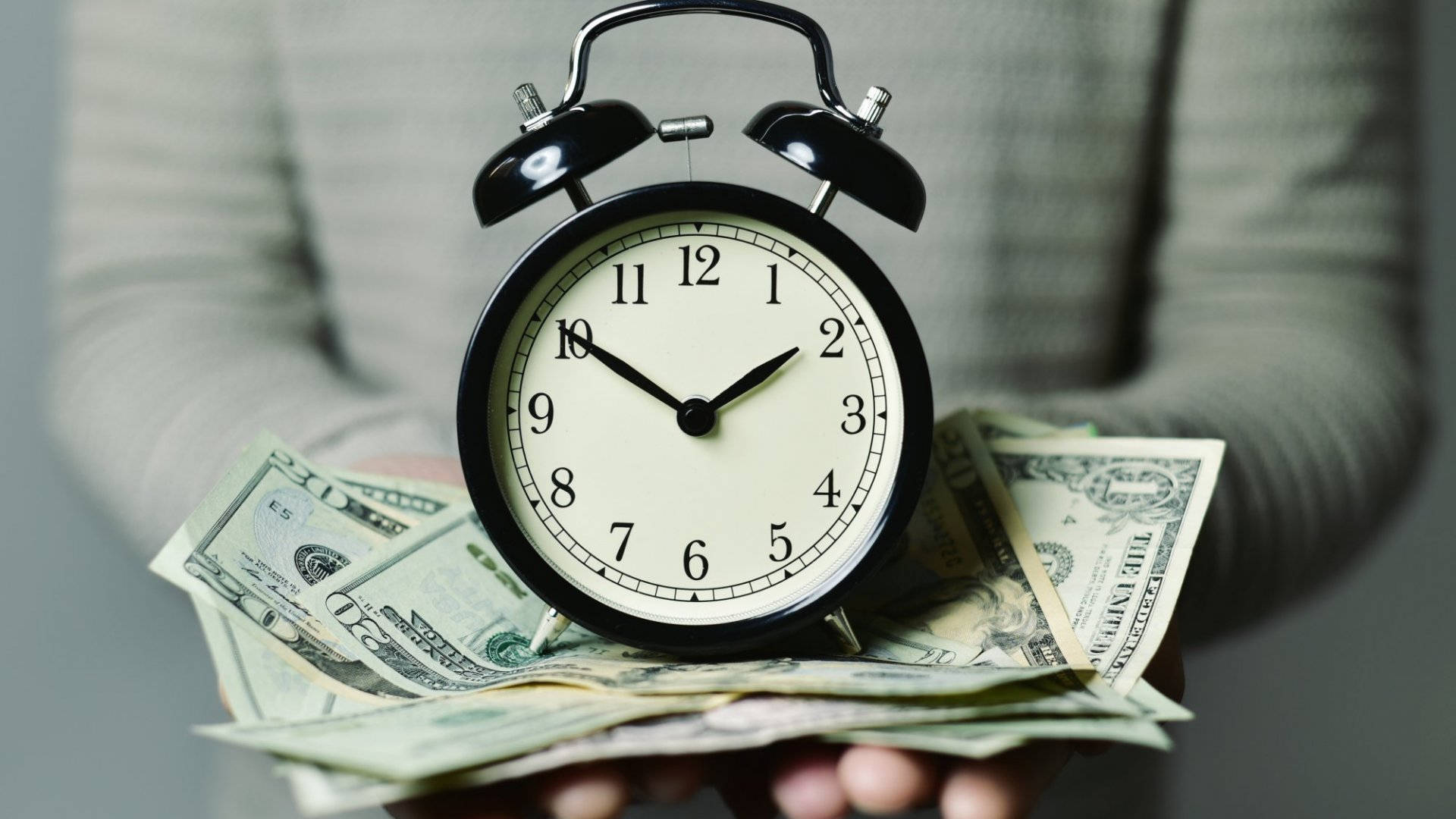



Money is more than a medium of exchange — it is a record of contribution and a store of power, security, and status. Because people often value holding money for these intangibles rather than spending it, governments can sometimes print and spend new money without causing inflation, creating the illusion of a “free lunch.” But this only lasts while those claims on resources remain idle; when confidence returns and money moves, the economy must either raise taxes, pay higher interest to keep money sidelined, or allow inflation to erode its value. Printing money can defer costs, but rarely erases them — and the eventual bill is always easier to pay if it’s shared gradually rather than imposed in a sudden fiscal shock.
What is Money
In discussions on fiscal policy, it is common to hear economists and commentators talk about the economy as though it were a single, unified entity — a collective “we” that has shared goals, shared needs, and a single will. Proponents of Modern Monetary Theory (MMT), for example, often defend deficit spending by noting that “we” are living below our means, with idle factories, underused capacity, and millions of people eager to work. The implication is that “we” could simply decide to produce more for ourselves and thereby close the gap between actual and potential output.
But this framing hides a critical truth: there is no singular economic “we.” The economy is not a self-contained person seeking to improve its own welfare. It is a collection of individuals — each with their own desires, aversions, and incentives. These individuals rarely work for others without some form of compensation. To see this in practice, imagine walking into a Manhattan restaurant, approaching a couple at dinner, and asking them for $50 so that “we” can enjoy a meal. The appeal to “our” collective hunger is unlikely to convince them.
It is precisely because individuals act in their own interest that money exists. Money enables people to exchange their labor and track obligations to reciprocate. It records how much value each person has contributed to the total pie and how much they have a right to consume in return. Without money, trades would have to be perfectly reciprocal in time and value — a cumbersome and inefficient system.
Consider a doctor and a lawyer. The lawyer wants medical services, but the doctor does not need legal help right now. However, the doctor might want a meal from a chef, and the chef might want legal services. Money solves this multi-party coordination problem. The lawyer pays the doctor in money earned from the chef, the doctor uses that money at the restaurant, and each party gets what they value. In this way, money lets contributions be exchanged efficiently.
Not everyone can produce something that others want or need. Some are too sick, too old, too disabled, or too disadvantaged to compete in the market. Leaving them to suffer offends the moral sense. Yet few people will voluntarily give up significant portions of their labor for nothing in return. To solve this, societies choose political systems that compel redistribution: through taxation, each person surrenders a slice of their income to support those who cannot pay. If a patient cannot afford a doctor, the doctor is compensated via taxes collected from others. The burden on each taxpayer is tolerable because it is spread widely, the cause is morally compelling, and the system provides everyone with a form of insurance — after all, anyone could one day find themselves in need.
Turn On The Printing Press
Advocates of aggressive fiscal expansion often suggest bypassing taxes altogether. Instead of having taxpayers compensate the doctor for the charity he performs, why not have the government create new money and pay him directly? This relieves the political resistance to taxation, since no one feels an immediate loss.
Money’s nature creates a tempting window: because people value money not only for what it can buy but also for the power, security, and status it represents, new units of money can sometimes be issued without sparking inflation. If enough recipients of that money prefer to hold it rather than spend it, the new claims on society’s output will simply sit idle.
Indeed, money’s meaning is not just transactional. It carries deep psychological weight, shaped by habit, history, and social context. A million dollars feels like a million dollars, regardless of what we plan to spend it on. This allows money to serve three intangible functions:
- Power — The ability to command resources at will, now or in the future. Even unused, this ability brings satisfaction.
- Security — A buffer against misfortune. Large savings mean you can sustain your lifestyle even if disaster strikes.
- Status — Society often measures worth by financial wealth. The possession of money affects how others treat you, and how you see yourself in relation to peers.
Because these benefits do not require spending, people can desire money purely to hold it. If producers of goods and services value accumulating money for these intangible reasons, they might willingly provide output to others who cannot reciprocate — so long as they receive money in return, even if they never spend it. In this way, the monetary system can mask what is essentially charity.
A Barter Analogy
To strip away the abstraction, imagine a society with no money, only direct barter. Each person’s time and labor are worth roughly the same. If a doctor treats your illness, you promise to grill him a steak later. If he treats Jim, Jim might pay with a steak he received from you for cleaning your house.
In this system, a promise redeemable at any time is like money: a general claim you can “spend” whenever you choose. A promise redeemable only after some delay is like debt. If we decide that doctors should provide charity to the poor but we don’t want to reciprocate right away, we can give the doctor promises instead. If he values the possession of those promises (power, security, status) more than redeeming them, he may never cash them in — effectively doing the work for free. But if he or future holders of those promises eventually demand fulfillment, we must either provide the labor immediately or persuade them to wait by offering interest — the barter equivalent of paying someone to give up their seat on an overbooked flight.
In a monetary economy, an overload of claims (money) relative to real capacity can be resolved by inflation. If everyone tries to redeem their claims at once, prices rise until some are priced out. Inflation is effectively an involuntary default on part of the promises. In barter, no such mechanism exists — the only options are to default explicitly or pay interest to delay redemption. In a money system, if idle money is suddenly mobilized, the central bank can raise interest rates to persuade holders to keep it idle. But higher interest rates mean higher payments to those with money — financed either by taxes or further money creation. This is the hidden future cost of printing money today.
The Myth of the Permanent Free Lunch
Fiscal expansionists argue that if people want to hold money instead of spending it — as during a recession — we can print and spend without causing inflation. This works only if the newly created money is never spent in the future. But economies are cyclical. When confidence returns, money will move, claims will be exercised, and either interest rates will have to rise to keep it idle or inflation will result. Rising interest obligations, in turn, force higher taxes later, concentrated into a painful fiscal shock. Thus, even if printing money now seems costless, it may simply defer the tax burden — and magnify it — for the future. A gradual approach, such as taxing the wealthy today to fund spending, spreads the cost over time and reduces future instability. It also has the side effect of limiting excessive concentrations of monetary power, which, unlike security or status, can directly threaten others’ autonomy.
Fundamentally, money is a social technology that enables cooperation among self-interested individuals by recording and transferring claims on each other’s time, labor, and resources. But it is also a store of intangible value — power, security, and status — that can motivate people to work without immediate reciprocation. This dual nature makes it tempting to fund public expenditures by creating new money. So long as holders prefer to keep it idle, there is no inflation. But the risk is always that, one day, they will want to use it — and the economy’s real capacity may not be able to meet the flood of claims without painful adjustments.
Understanding this interplay — between money’s tangible role in allocating resources and its intangible role in human psychology — is essential for sound fiscal policy. Printing money can, for a time, conjure the illusion of a free lunch. But the bill may still come due, not in the form of an immediate crisis, but in the deferred costs of interest, taxation, or inflation when the cycle turns.
Disclaimer
The information provided on TheLogbook (the "Substack") is strictly for informational and educational purposes only and should not be considered as investment or financial advice. The author is not a licensed financial advisor or tax professional and is not offering any professional services through this Substack. Investing in financial markets involves substantial risk, including possible loss of principal. Past performance is not indicative of future results. The author makes no representations or warranties about the completeness, accuracy, reliability, suitability, or availability of the information provided.
This Substack may contain links to external websites not affiliated with the author, and the accuracy of information on these sites is not guaranteed. Nothing contained in this Substack constitutes a solicitation, recommendation, endorsement, or offer to buy or sell any securities or other financial instruments. Always seek the advice of a qualified financial advisor before making any investment decisions.