



Blockchains are like shared notebooks, but each one agrees on the “next page” in a different way. In this post, we explain the concepts of proof-of-work, proof-of-stake, and proof-of-history.. These design choices shape how fast transactions settle, how safe they are from reversal, and what kinds of apps (smart contracts) can be built on top. From Bitcoin’s sturdy but simple base layer to Ethereum’s world computer, to Solana’s high-speed parallel engine, each ledger offers a unique blend of trade-offs for developers and users alike.
Decentralized ledgers all tackle the same core problem: how a network of mutually distrustful nodes can agree on an append‑only history of state transitions, yet they make different choices about who gets to propose/validate blocks, how conflicts are resolved, when a transaction is considered final, and what kind of state machine is executed. Those choices, consensus, data model, execution environment, and finality, directly determine what kinds of smart contracts are practical, how you reason about security, and where performance ceilings lie.
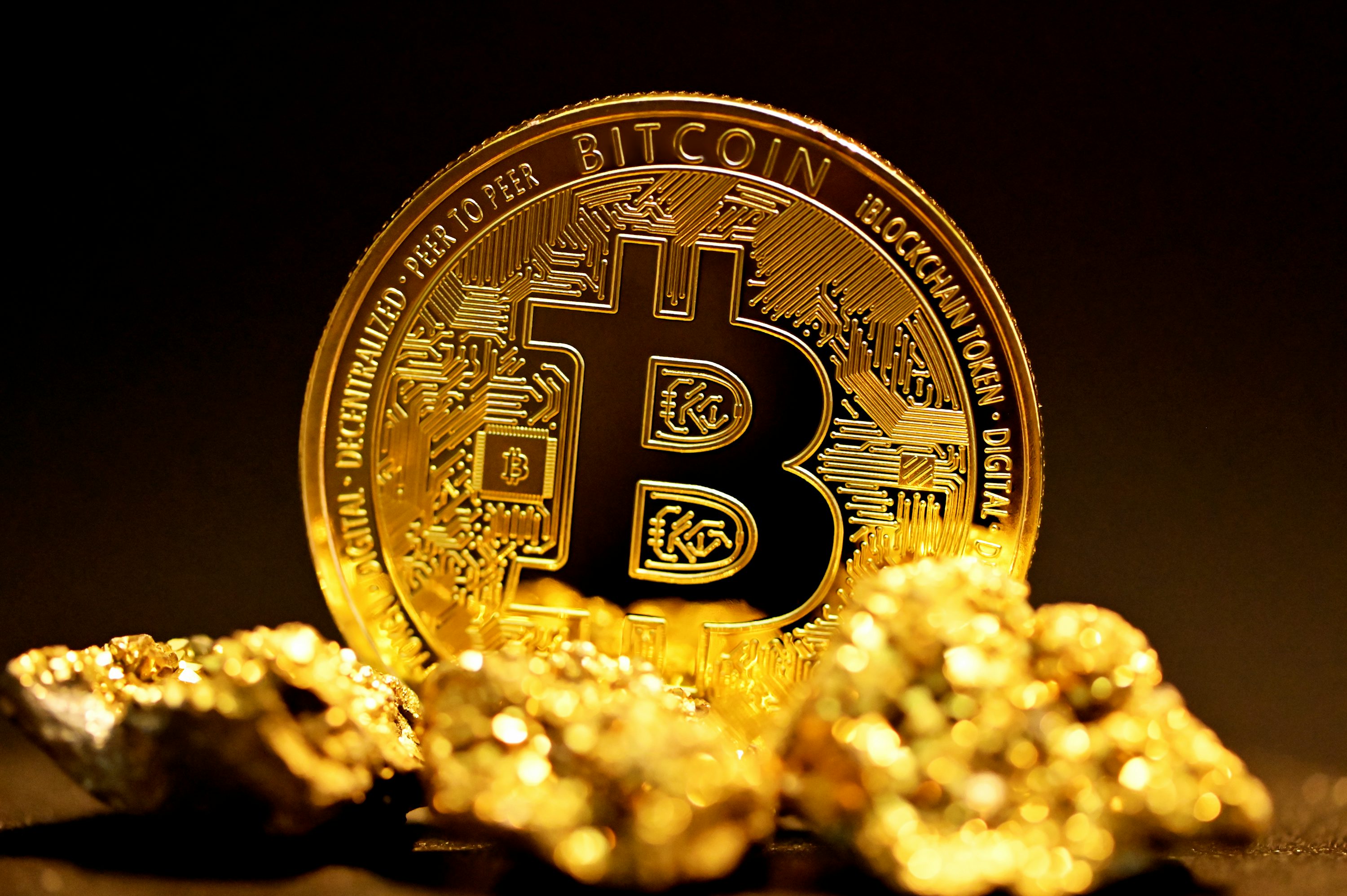
Proof‑of‑Work (Example: Bitcoin / BTC)
Secures the chain with hashpower. Miners assemble transactions into blocks and solve a difficulty‑adjusted puzzle in what is called “mining”; the chain with the most cumulative work is canonical. As such, if a majority of computing power is controlled by honest nodes, the honest chain will grow fastest and outpace competing chains.
Finality is technically probabilistic: the deeper a block sits under subsequent work, the harder it is to reorganize. However, to modify a past block, an attacker would have to redo the proof-of-work of that block and all blocks after it and then surpass the work of the honest nodes. The probability of a slower attacker catching up diminishes exponentially as subsequent blocks are added.
PoW tolerates volatile networks and open participation, but requires electricity and specialized hardware. In addition, Bitcoin’s Script is deliberately non‑Turing complete (to ensure that all transaction verification can terminate within finite time); and as such while one can build complex protocols, one often need to engineer them as off‑chain state machines with on‑chain dispute resolution.
Proof‑of‑Stake (Example: Ethereum / ETH)
Replaces hashpower with economic stake. Validators lock tokens, take turns proposing blocks, and attest to others’ blocks; misbehavior is deterred by slashing. In other words, system then picks block writers and validators based on staked deposits. If they cheat, part of their deposit is confiscated.
Modern PoS couples a fork‑choice rule (pick the most likely valid chain) with a finality protocol that upgrades chosen checkpoints to economically final once a supermajority of stake validators agree. As such the system provides fast confirmations with periodic hard finality, but require “weak subjectivity” where new or long‑offline nodes need to trust a recently finalized checkpoint to bootstrap their sync with the network.
The major practical wrinkle is transaction ordering power of the block writers; because block writers decide the order of transactions, they can sometimes profit by reordering them (the maximum extractable value via re-ordering transactions is called the MEV). Some designs implement proposer‑builder separation to curb harmful reordering incentives, but nonetheless some MEV typically remain.
The relative ease of building on Proof of Stake blockchains is a direct result of their greater scalability, efficiency, and lower operational costs compared to Proof of Work networks. PoS’s design bypasses the computationally intensive “mining” process, creating a more accessible and performant environment for developers. The reduced computational cost of validation means that the operational expenses of the network are significantly lower, making it more cost-effective to use decentralized applications (dApps) and services built on the network.
Proof‑of‑History (Example: Solana / SOL)
PoH is best seen as a cryptographic clock: a sequential hash stream that timestamps events so the network can order them without constant round‑trip coordination. Consensus itself is stake‑weighted and requires each transaction to declare which accounts it will read and write; validators then schedule non‑overlapping transactions across cores for high parallelism.
In simpler terms, Solana adds a reliable “clock” to the PoS process so everyone can line up votes in an asynchronous way instead of needed to agree to finalize a block at the same time. This architecture allows Solana’s engine to run many transactions in parallel; the result is very high throughput and low latency.
EVM (Ethereum Virtual Machine) relies on a sequential, single-threaded execution model, and manages a global state where all data is stored together; while the SVM (Solana Virtual Machine) uses a register-based model and parallel processing which separates the logic (programs) from the data (accounts) to achieve significantly higher transaction throughput. This architectural divergence makes SVM more suitable for high-throughput applications, while EVM offers broad ecosystem compatibility.
Summary
Proof-of-Work (Bitcoin) secures the network with computing power, offering high resilience but slower, probabilistic finality and limited programmability. Proof-of-Stake (Ethereum) replaces mining with staked tokens, providing faster confirmations, lower costs, and broad developer tooling—, hough it must manage risks like MEV. Proof-of-History (Solana) adds a cryptographic clock to PoS, enabling parallel transaction processing with extremely high throughput, making it ideal for real-time, high-volume applications.
Disclaimer
The information provided on TheLogbook (the “Substack”) is strictly for informational and educational purposes only and should not be considered as investment or financial advice. The author is not a licensed financial advisor or tax professional and is not offering any professional services through this Substack. Investing in financial markets involves substantial risk, including possible loss of principal. Past performance is not indicative of future results. The author makes no representations or warranties about the completeness, accuracy, reliability, suitability, or availability of the information provided.
This Substack may contain links to external websites not affiliated with the author, and the accuracy of information on these sites is not guaranteed. Nothing contained in this Substack constitutes a solicitation, recommendation, endorsement, or offer to buy or sell any securities or other financial instruments. Always seek the advice of a qualified financial advisor before making any investment decisions.